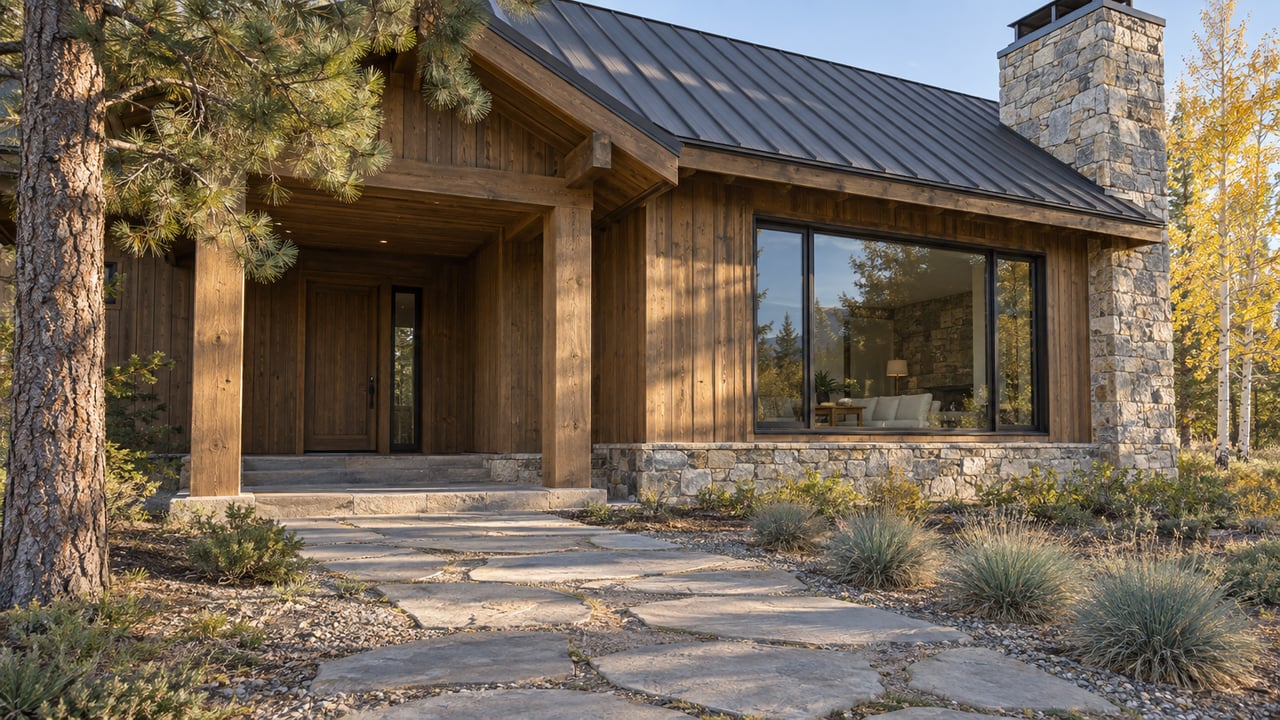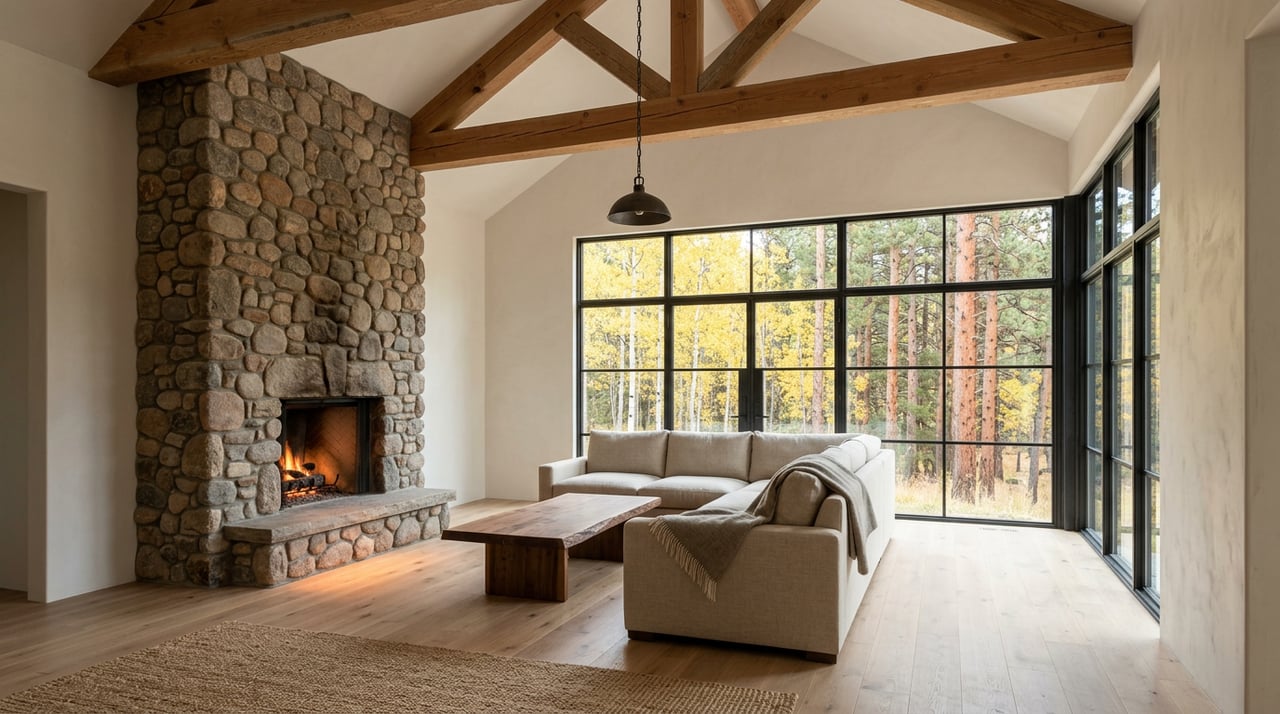
In November 2020, Russell Palmer and Ramona Stewart bought a home in a quiet subdivision just outside Whitefish. Two years later, they moved the property into an LLC called R&R Mountain Escapes and applied to Flathead County for a short-term rental permit. The county approved it. They listed the house on Airbnb and VRBO through a local vacation rental company, welcomed up to ten guests a night, and by most accounts ran a legitimate, permitted business that generated real income.
Their neighbors sued anyway.
The subdivision had been platted in late 1990 by a woman named Edna Mae Astrope, whose recorded covenants dedicated the land to "country residential living" and barred any commercial use. Those same neighbors, the Brandt, Fladager, and Lautaret families, had already stopped two earlier owners of that same house from renting it out short-term. When R&R tried a third time, with a county permit in hand, the neighbors went to court over an incident where six unattended children staying at the rental wandered into a pasture with a bull and had to be pulled out quickly. A Flathead County district judge sided with the neighbors in November 2023 and ordered a stop to any rental under 30 days. R&R appealed all the way to the Montana Supreme Court, which affirmed the ruling on July 22, 2025.
The county's permit never mattered. The case was never about zoning at all.
The Question Was Never the Permit
Montana's high court had actually muddied this exact issue five years earlier, in a 2020 case called Craig Tracts v. Brown Drake, when it found that a similarly worded "residential purpose" covenant was too vague to block short-term rentals on its own. That ruling left property owners across the state with a reasonable belief that a residential-use covenant, by itself, wasn't enough to stop them from renting nightly.
The Astrope covenants gave the court more to work with. Reading the declaration as a whole, the justices found language that didn't just describe residential purpose loosely. It explicitly forbid any commercial activity, restricted structures to single-family use, and prohibited anything that could become a nuisance to neighbors. Justice Cory Swanson, writing separately, put the underlying principle plainly:
"A court's cavalier treatment of such a property right would be contrary to settled Montana law."
That property right belonged to the neighbors, not to R&R. Once a subdivision's declaration is recorded, every later buyer takes the land already bound by it, whether they read the document or not.
Two Rulebooks, and Neither One Protects You From the Other
Anyone buying rental property near Whitefish is really clearing two separate systems, and confusing them is how buyers get surprised after closing.
Inside the city limits, the City of Whitefish's short-term rental ordinance restricts legal rentals to five zoning districts: WB-3, WRR-1, WRR-2, WRB-1, and WRB-2. A property outside those districts cannot get a city STR permit no matter how nice the covenants are. Property owners inside an approved zone still need a business registration, an annual fire marshal inspection, a state public accommodation license through the Flathead City-County Health Department, and a monthly resort tax filing on top of the state's lodging tax. Platforms like Airbnb and VRBO collect the statewide lodging tax automatically, but Whitefish's local resort tax is the owner's own responsibility to register and remit.
Outside the city, in unincorporated Flathead County, a different land-use process governs, which is exactly why R&R was able to get a county permit for a property that sat well outside city zoning jurisdiction altogether.
Neither system has anything to do with what a private subdivision's covenants say. A city or county permit confirms that the government has no objection. It says nothing about whether your specific neighbors, bound to you by a document recorded decades before you were born, have already agreed among themselves that your use isn't allowed.
| Layer | Who governs it | Who enforces it | When it surprises buyers |
|---|---|---|---|
| Zoning | City of Whitefish or Flathead County | Local government | Discovered too late if buyer assumes county and city rules are interchangeable |
| Covenants | The subdivision's original developer, decades ago | Any neighbor, through a lawsuit | Discovered after closing, when a permit already felt final |
| Tax classification | State of Montana, tax year 2026 forward | Montana Department of Revenue | Discovered on the first tax bill if the property was never enrolled |
The Tax Bill Changed Too, and It Has Nothing to Do With Zoning
Montana overhauled its residential property tax structure starting with 2026 tax bills, under legislation passed in 2025 (HB 231 and SB 542). The change has nothing to do with permits or covenants, but it changes the economics of owning a Whitefish rental just as much as either of those legal risks does.
Under the new system, a primary residence enrolled through Montana's homestead program or a qualifying long-term rental, meaning leases of 28 days or longer where the tenant lives there at least seven months a year, gets taxed at a graduated rate starting at 0.76% on the first roughly $378,000 of value. A second home or a short-term rental, regardless of value, pays a flat 1.90%.
Take Whitefish's own recent numbers as an illustration. The median sale price in Whitefish was $895,000 over the three months ending in June 2026, according to Redfin. A property at that value taxed at the flat 1.90% rate runs roughly $17,000 a year before mill levies. The same property, if it qualifies as a long-term rental under the graduated tiers, lands somewhere between about $7,500 and $8,600 a year, depending on how the upper bracket above the first $378,000 is applied. That's a gap of roughly $8,500 to $9,500 a year on a single, ordinary Whitefish property, purely based on how it's used and whether it's enrolled correctly.
There's a wrinkle worth knowing if you're buying through an entity, which many investors do. The homestead rate for a primary residence requires ownership by an individual, a couple, or a grantor revocable trust, so an LLC can't qualify that way. The long-term rental rate is different: LLCs and corporations are allowed to claim it, as long as the actual use, 28-day-plus leases with a tenant living there most of the year, qualifies. Short-term use disqualifies the property from that lower rate no matter who owns it.
The enrollment window for the 2027 tax year is open right now, running from May 4, 2026 through March 1, 2027. Anyone closing on a Whitefish property this fall with plans to convert it into a qualifying long-term rental, or to move in as a primary residence, has that window to file. Miss it, and the property defaults to the flat 1.90% rate for the year with no retroactive fix.
What This Means Before You Write an Offer
None of these three layers cancels out the others. A property can clear zoning cleanly, sit in the right district with a straightforward permit path, and still lose its rental use entirely because of a covenant nobody pulled before closing. A property can clear both zoning and covenants and still cost thousands more a year than expected because it was never enrolled for the right tax classification.
Before removing contingencies on a Whitefish investment property, it's worth working through these steps in order:
- Confirm whether the parcel sits inside Whitefish city limits or in unincorporated Flathead County, since that determines which ordinance and which permitting office applies.
- Pull the subdivision's recorded declaration of covenants from the Flathead County Clerk and Recorder's office and read it for any blanket prohibition on commercial or multi-family use, not just the specific words "short-term rental."
- Decide on a rental strategy, short-term or long-term, before closing, since that choice changes both your legal exposure under any covenant and your tax bracket under the state's 2026 rules.
- If the plan is long-term rental or primary residence, file for the reduced rate at Homestead.MT.gov within the current 2027 enrollment window.
A Few Questions Worth Asking Directly
Does a city or county rental permit protect me from a neighbor's lawsuit over covenants? No. The Montana Supreme Court's ruling in the R&R case makes clear that a government permit and a private covenant are separate questions entirely, and a valid permit does not override a recorded declaration that prohibits commercial use.
If my subdivision's covenants don't mention short-term rentals specifically, am I safe? Not necessarily. The court looked at the covenants as a whole, including prohibitions on commercial activity and nuisances, rather than requiring the word "rental" to appear anywhere in the document.
Can I still get a lower tax rate if I buy through an LLC? Not through the homestead program, which requires individual or trust ownership, but yes through the long-term rental tier, provided the property is actually leased for 28 days or longer with a tenant living there most of the year.
Buying a rental property in the Flathead Valley still makes sense for a lot of buyers, but the math and the paperwork both got more specific this year. If you're weighing a Whitefish purchase and want a straight read on the zoning, the covenants, and what the new tax structure actually does to your numbers, Gina Ellis can walk through the specifics with you before you write an offer. Request your complimentary home valuation to start that conversation.